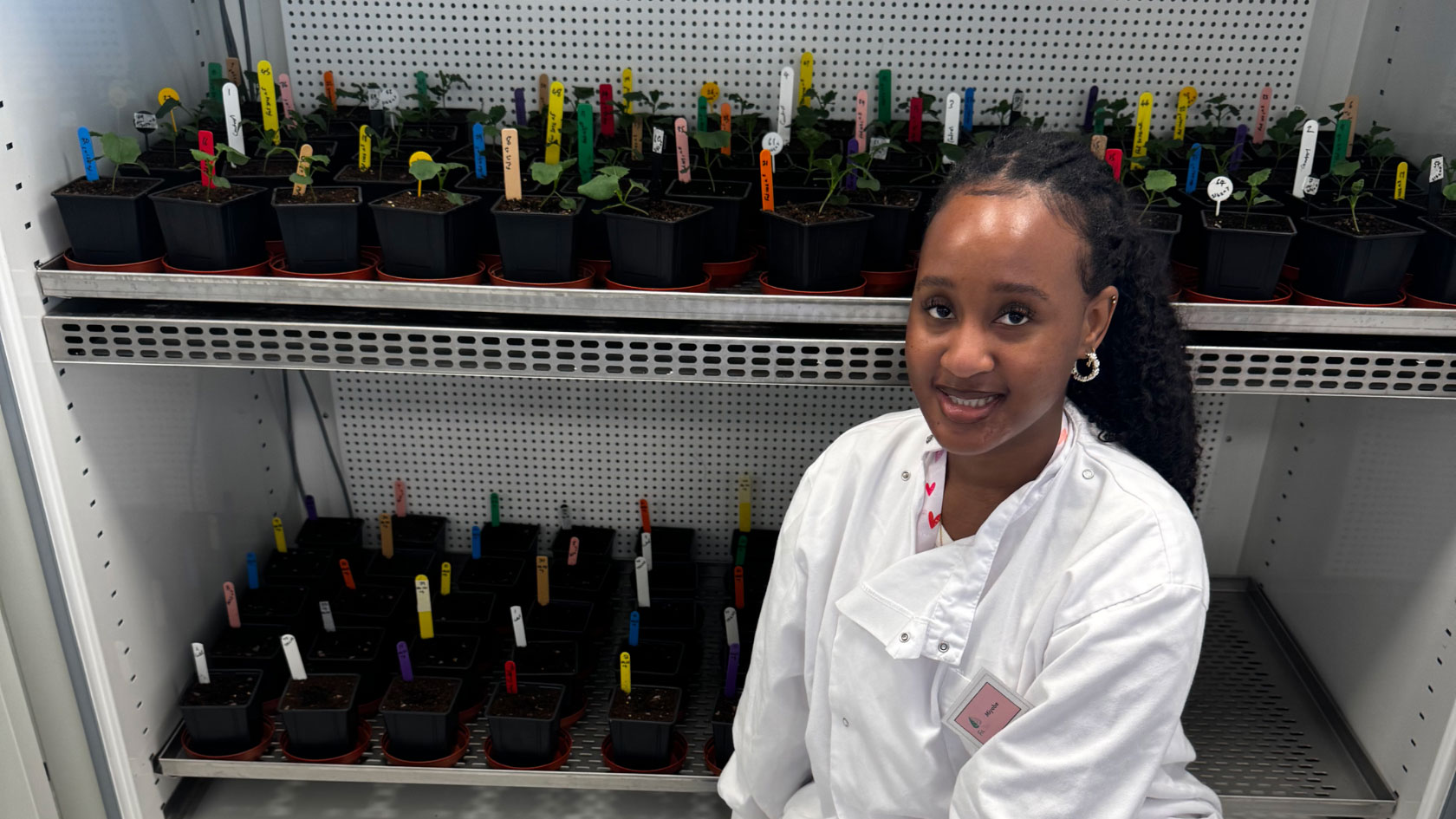
As Miyoba’s placement with FA Bio comes to an end, she reflects on nearly 10 months of learning, growth and hands-on scientific experience that has helped shape both her confidence and future ambitions.
Joining the team as part of her MSc studies, Miyoba quickly discovered that working in industry offered far more than technical experience alone, it provided insight into collaboration, adaptability and the real-world impact scientific research can have on agriculture and sustainability.
Choosing FA Bio
For Miyoba, the decision to apply for a placement with FA Bio was driven by both scientific curiosity and personal connection.
“I was attracted to FA Bio because it offered the opportunity to gain hands-on industry experience in plant and soil science within a research-focused environment,” Miyoba explains. “I was particularly interested in joining a start-up, as the smaller team structure meant there would be a wide variety of responsibilities and opportunities to learn quickly.”
What made the opportunity especially meaningful was FA Bio’s mission to develop biological products that improve plant resilience to environmental stress, including drought.
“Coming from a country that has experienced drought and relies heavily on maize production, I found the company’s work especially meaningful and relevant to challenges I have seen firsthand.”
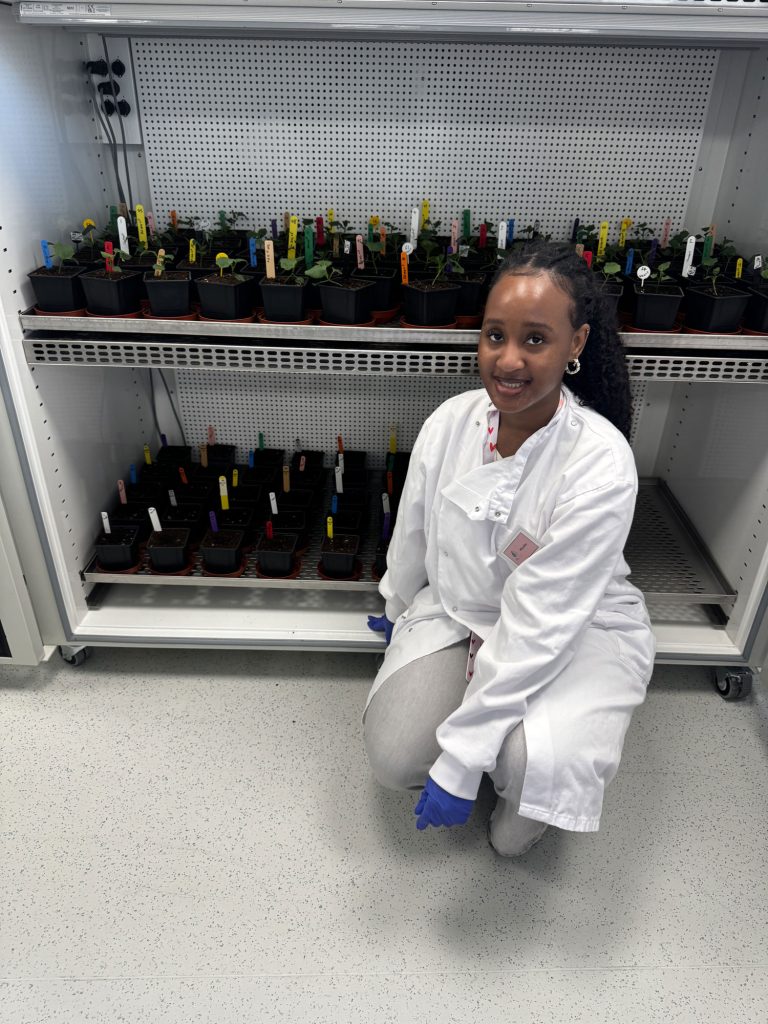
Learning the realities of industry science
Like many students entering industry for the first time, Miyoba’s first few weeks were a learning curve. Alongside inductions and documentation, she spent time observing experiments in the lab and glasshouse before gradually taking on more responsibility herself.
“What stood out to me most was the importance of the induction process before being allowed to work independently in the lab,” Miyoba says. “Even for techniques I had previously carried out at university, it highlighted how seriously safety, consistency and protocols are taken in an industry environment.”
Over the course of the placement, Miyoba became involved in a wide range of activities including experimental setup in controlled environments and glasshouses, laboratory work, bioassays, microbial plating, data analysis, DNA extraction, PCR and scientific reporting.
One of her proudest achievements was the confidence she gained in managing experiments independently and contributing throughout the full research process, from setup through to analysis.
“At the beginning of my placement, I mainly supported other team members and learned by observing and assisting,” Miyoba reflects. “As I developed my skills and confidence, I was trusted with more responsibility and by the end of the placement I was able to work much more independently and manage tasks on my own.”
Beyond technical skills
While Miyoba strengthened a broad range of technical laboratory skills, she says the placement also helped develop equally important professional skills.
“I developed my communication, teamwork, adaptability and time management skills,” Miyoba comments. “I also became more confident asking questions, taking initiative and working independently.”
The supportive culture at FA Bio played an important role in that development.
“The team were very supportive throughout my placement. Everyone was approachable and willing to answer questions or explain processes in detail. I was given guidance when needed but also encouraged to develop independence and confidence in my work over the course of my placement.”
Outside of the lab, the collaborative atmosphere and team culture left a lasting impression. “I will miss the supportive and collaborative atmosphere within the team,” Miyoba says. “One of the things I valued most at FA Bio was the opportunity to work with people from a wide range of roles, experiences and backgrounds. Unlike university, where you are often surrounded by people with similar academic experiences, the team at FA Bio brought different perspectives and ways of thinking, which created a really supportive and interesting environment to learn in. It taught me how valuable diversity is within science, not only for teamwork and communication, but also for approaching challenges and problem solving in different ways.”
Understanding the bigger picture
For Miyoba, one of the most valuable aspects of the placement was seeing how scientific research translates into real-world impact.
“The placement helped me understand how scientific research is translated into practical applications within industry,” Miyoba explains. “I gained insight into how experiments are designed not only to answer scientific questions, but also to create solutions that can have real agricultural and commercial value.”
She also gained a deeper appreciation for the scale of work behind innovation. “I got an insight into how much research, labour, time and money goes into research,” she says.
That experience reinforced her interest in pursuing a future in scientific research and industry, potentially continuing into PhD study.
Why placements matter
Reflecting on the experience, Miyoba believes placements are an essential opportunity for students preparing for scientific careers.
“Placements are extremely valuable because they give students the opportunity to apply their academic knowledge in a professional setting while developing practical and transferable skills,” Miyoba says. “They also help build confidence and provide insight into potential career paths.”
Her advice to other students considering a placement year is simple, “take the opportunity.”
“These 10 months flew by, and I am a much better person and scientist because of it,” Miyoba comments. “Even if you think you don’t need a placement, you should still apply because you learn far more than you expect.”
When asked what advice she would give her first-day self, her answer reflects just how much she has grown over the past year. “It’s okay not to know everything at the beginning. Just ask questions. Everyone is very patient and willing to help, and asking questions is one of the best ways to learn and improve.”
When asked to sum up her experience in just three words, Miyoba responded “fast-paced, growth and adaptability.”
As Miyoba returns to complete her MSc and prepares for the next stage of her scientific career, her journey highlights the importance of placements in helping develop the next generation of researchers, innovators and industry scientists.
Miyoba Kangwa, Student at University of Hertfordshire