
Reflections from TechTour Resilient Ag 2026: Why Resilient Agriculture Matters More Than Ever
At the start of the month, I had the opportunity to attend TechTour Resilient Ag 2026, where founders, investors, corporates and policymakers gathered to discuss one of the most pressing questions facing global food systems, ‘how do we build true resilience into agriculture’?
The conversations were candid, challenging and some uncomfortable, but that is exactly what the sector needs right now. Agriculture is facing a convergence of pressures that cannot be solved by incremental change. What became clear throughout the event is that resilience is no longer simply a sustainability ambition, it is a necessity.
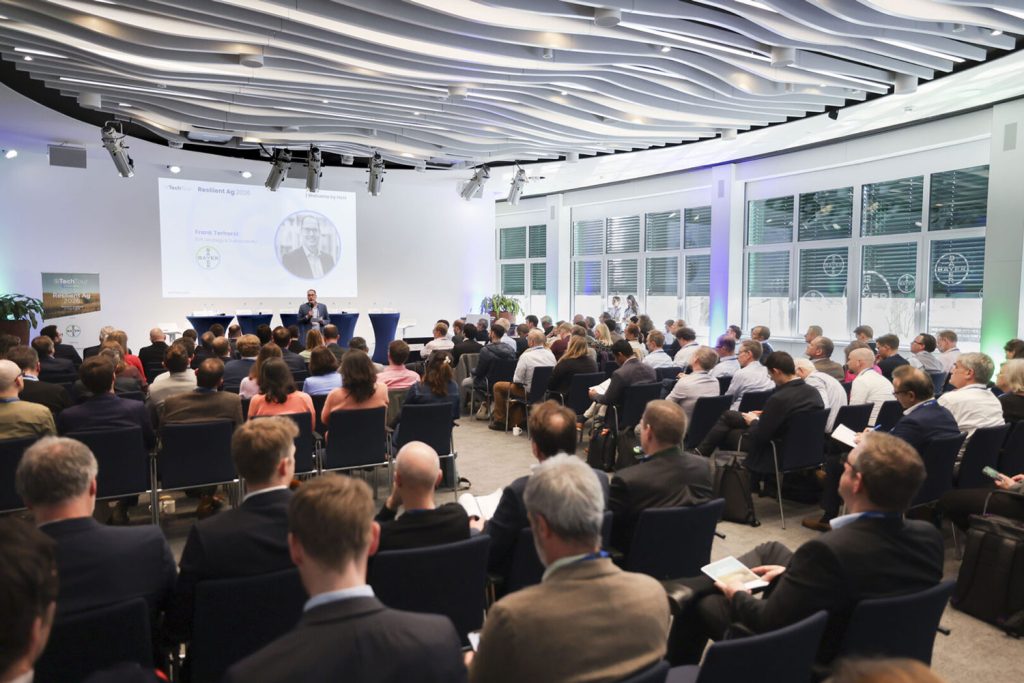
Reflections from TechTour Resilient Ag 2026: Food security is no longer abstract
One discussion that struck me came from conversations around food security in the Middle East. In places like Dubai, food systems depend heavily on imported supply chains. When logistics are disrupted, the margin for error is incredibly small. It was suggested that the city has only a few weeks of food supply because food is mostly supplied by air or sea.
This reality highlights the broader truth, that food security and agricultural resilience are deeply interconnected. Any disruption, whether geopolitical, environmental or economic, quickly exposes how fragile global supply chains can be.
Food security is no longer abstract
Another major topic of discussion was the growing risk of a new fertiliser crisis. A significant share of the world’s fertiliser supply moves through the Strait of Hormuz, one of the most critical trade arteries for crop nutrients, with an estimated 25 – 33% of all seaborne nitrogen fertiliser passing through this narrow route. Access restrictions to shipping in the region could rapidly ripple through global agricultural markets.
At the same time, fertiliser production itself is tightly linked to natural gas prices, and when energy costs surge, fertiliser plants often reduce output or shut down entirely because production becomes economically unviable. With the Middle East acting as a major manufacturing hub for crop nutrients, disruptions to energy markets or shipping routes could leave producers unable to fulfil supply contracts due to force majeure.
We have already seen how fragile this system can be during the fertiliser price spikes of 2021 and 2022. If similar disruptions occur again, farmers around the world could face rising input costs and constrained availability, placing additional pressure on food production systems that are already stretched.
This is exactly why biological alternatives and nutrient use-enhancing technologies are gaining urgency. Solutions that improve nutrient uptake from soils or reduce dependence on synthetic inputs will play a key role in stabilising agricultural systems.
At FA Bio, we believe the fertiliser challenge highlights one of the biggest structural inefficiencies in modern agriculture. We continue to add more inputs to the system rather than improving how efficiently crops use the nutrients already available. Nutrient use efficiency (NUE) is a major focus of our development pipeline, as we identify naturally occurring fungal microbes that enhance the interactions between plant roots and the surrounding soil, helping crops access and utilise nutrients more effectively.
By fundamentally improving the efficiency of the system, farmers can maintain productivity while reducing input dependence. In a world of volatile supply chains, climate pressure and rising input costs, biological solutions that increase NUE represent a powerful pathway toward more resilient, economically sustainable agriculture.
Climate still sets the clock
One statistic highlighted at the event was that climate influences roughly 75% of crop yield outcomes.
There is no startup that can control the weather, and no technology that can eliminate climate risk entirely. But what we can do is help crops become more resilient to the stresses that climate variability creates, such as drought, disease pressure, soil degradation and nutrient limitations.
This is where biological innovation becomes particularly powerful. Microbial solutions can strengthen the natural systems that support crop productivity, improving the ability of plants to perform under increasingly unpredictable weather conditions.
The venture capital model in AgTech
One of the most interesting debates during the event centred around whether the traditional venture capital model is well suited to agriculture.
Unlike software, agricultural innovation moves at the pace of biology. Technologies must go through years of field validation, regulatory approval and farmer adoption cycles before reaching scale. Agriculture is also one of the most regulated and fragmented industries globally, with different approval systems across regions.
These realities create a mismatch with venture capital funds’ timelines that typically expect rapid growth and fast exits.
At the same time, the sector is experiencing longer liquidity cycles and fewer acquisitions, which is reshaping venture economics. For investors and founders alike, this raises an important question, ‘how do we finance innovation in resilient agriculture in a way that reflects the realities of the industry’?
The role of corporates in bridging the gap
One of the most constructive conversations followed the keynote talk by Carl Collins, who challenged the industry to rethink the relationship between startups and multinational companies.
The bridge between emerging innovators and large agricultural corporations is critical. Startups bring new science, agility and breakthrough technologies, while multinational companies bring scale, regulatory expertise, manufacturing capacity and global distribution.
FA Bio’s partnerships with global industry leaders are a key pillar for the success of bringing our innovations to growers. Our collaboration with Bayer through the EIT is advancing the discovery and development of bioinsecticides targeting key pests to move promising microbial candidates toward product development and regulatory pathways. At the same time, our licensing agreement with IFF enables promising biofungicide leads to progress from discovery into market, leveraging IFF’s expertise in fermentation, formulation, scale-up and global market deployment.
These collaborations demonstrate how startups and multinational companies can work together to bridge the gap between breakthrough biological discoveries and real-world agricultural solutions, an important mechanism for accelerating innovation in agriculture.
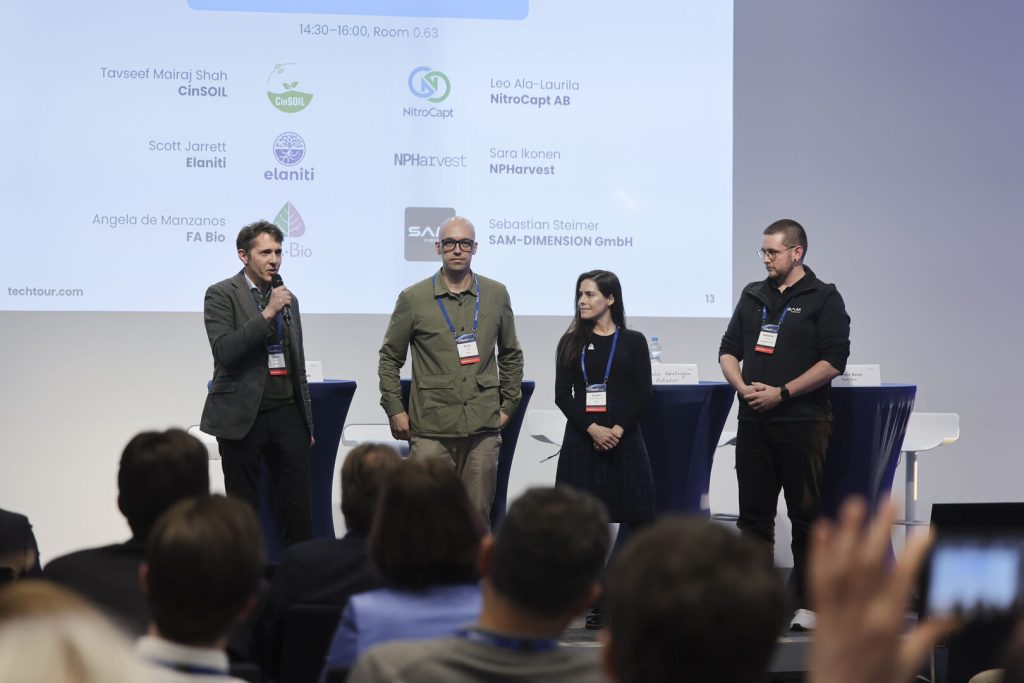
Why resilient agriculture is an investment opportunity
A key takeaway from the event was that resilient agriculture represents one of the most impactful long-term investment opportunities in the food system, but only if we align expectations with the realities of the sector.
Agricultural innovation requires longer development cycles than software, adoption takes time and regulation is complex. However, collaboration between startups, corporates and end-users is often the most effective route to market.
Sustainability is now economic resilience. In other words, impact and returns are not mutually exclusive. When resilience becomes measurable, through yield stability, reduced input costs or improved soil health, the economic case becomes clear.
The role of microbial innovation
FA Bio believe microbial technologies can play a key role in addressing many of these pressures around resilient agriculture.
By discovering and developing soil microbes into effective biological inputs, we help crops become more resilient by:
- Improving nutrient use efficiency
- Strengthening resilience against environmental stress
- Reducing dependence on synthetic inputs
- Supporting long-term soil health
These solutions will not replace every agricultural challenge overnight, but they can complement existing systems and help farmers adapt to a rapidly changing environment.
Moving forward
Resilient agriculture is no longer optional. Global food systems are entering a period defined by climate volatility, resource constraints and geopolitical uncertainty. Addressing these challenges will require collaboration across startups, corporates, investors and policymakers.
Encouragingly, the conversations last week showed that the ecosystem is ready to engage in that challenge. And that gives me real optimism about what comes next.
Angela de Manzanos Guinot, Founder & CEO