The UK’s ambition to remain a global leader in science, technology, engineering and mathematics (STEM) depends not only on technical capability, but on people and their ability to contribute fully, challenge ideas and innovate without fear. As organisations increasingly compete for global talent, immigration policy is emerging as a critical, yet often under-examined, factor influencing psychological safety in the workplace.
As part of FA Bio’s engagement with the Royal Academy of Engineering’s Inclusive Leadership Programme, an initiative designed to strengthen inclusion across the engineering profession by equipping individuals and organisations to lead meaningful change at an industry and systemic level, we delivered a presentation titled the same as our year-long project, “Building an Inclusive and Psychologically Safe Workplace”.
During the project, we found a connection between immigration, psychological safety and employee voice. When we shared our results as part of the presentation, we identified that other companies had similar views, which presented an opportunity to engage with a topic often perceived as uncomfortable or avoided altogether. Immigration, while central to the engineering workforce, is rarely discussed openly as an inclusion or psychological safety issue. Insights drawn from organisational practice, sector engagement and leadership discussions, highlight how visa dependency and immigration restrictions can shape employee behaviour, wellbeing and long-term engagement across the STEM sector. These insights raise important questions for policymakers, employers and professional bodies concerned with the future of the UK STEM workforce.
Psychological safety as a foundation for innovation
Psychological safety, the belief that one can speak up, share ideas, raise concerns, or admit uncertainty without fear of negative consequences, is widely recognised as essential for high-performing teams. In engineering and scientific environments, where problem-solving, collaboration and continuous learning are fundamental, psychological safety is not a “nice to have”, it’s a prerequisite for quality, safety and innovation.
However, psychological safety is not experienced equally by all employees.
Structural factors outside the immediate workplace, particularly employment-linked immigration status and visa dependency, can have a measurable impact on how individuals participate in the workplace. Understanding these dynamics is essential for organisations and policymakers seeking to build inclusive, resilient STEM ecosystems.
Visa dependency and its impact on employee voice
For employees on Skilled Worker visas, employment is intrinsically linked to legal residency. If a role ends, whether due to redundancy, restructuring or business circumstances beyond an individual’s control, the employee typically has a limited window to secure another sponsoring employer. Failing this, they may be required to leave the UK and reapply from overseas.
This dependency can create a significant power imbalance that affects how safe individuals feel to speak up at work. Sector insights suggest that visa-linked employment can contribute to a “silencing effect”, where employees feel reluctant to challenge decisions, express disagreement or raise concerns for fear that doing so could put their job, and right to remain in the country, at risk.
In practice, this may manifest as:
- Avoidance of difficult conversations
- Hesitation to report issues or mistakes
- Withholding ideas that challenge established ways of working
- Agreeing outwardly while disengaging internally
The wider lived experience of working visas
Immigration status does not exist in isolation from daily life. For many international STEM professionals, working in the UK involves navigating cultural, financial and emotional challenges, alongside professional responsibilities, that can compound feelings of vulnerability and uncertainty. These experiences can significantly influence an individual’s sense of belonging and psychological safety.
Many of the challenges faced by internationally recruited professionals are not unique to any one country, sector or visa route, but are common features of the broader migration experience. Working in a second or third language, being separated from familiar food, music, festivals and cultural reference points, and navigating unfamiliar systems such as credit scoring, housing and healthcare are experiences that many immigrants can recognise. In isolation, these adjustments are part of settling into a new country, however, when combined with employment-linked visa dependency, they can become more acute.
In STEM contexts, where visa status is often directly tied to a specific role or employer, these everyday migration pressures may be compounded by heightened uncertainty and reduced autonomy, reinforcing feelings of vulnerability and affecting individuals’ willingness to speak up, challenge decisions or fully participate at work.
Skilled Worker visa restrictions can further limit professional development and personal connection. Time away from an employer’s office is tightly controlled, meaning sabbaticals are not permitted and extended training courses or academic programmes may be restricted. For some nationalities, even attending international conferences or professional events requires additional travel visas, adding complexity and stress to opportunities that are often essential for career development in STEM.
Collectively, these factors can intensify feelings of isolation even within otherwise supportive teams, and discourage individuals from “rocking the boat”, with consequences for innovation, learning and inclusion.
Economic contribution without equivalent security
International STEM professionals contribute significantly to the UK economy through taxation, innovation, and skills development. At the same time, they are often required to absorb substantial costs associated with working visas, including application fees and healthcare surcharges, while also contributing through regular payroll deductions.
Despite these contributions, many workers do not have access to public benefits for a minimum of five years, with proposals that could extend this period further. Visa renewals, typically required after three years, create ongoing uncertainty that can persist throughout key stages of career development.
This imbalance, high contribution combined with limited security, can have a direct impact on psychological safety and long-term commitment to working in the UK.
Salary thresholds and the future talent pipeline
Over recent years, minimum salary thresholds for Skilled Worker visas have risen sharply. While intended to manage migration levels, these thresholds risk excluding early-career engineers, scientists and technologists who have high potential but limited earning power at the start of their careers.
For the STEM sector, this creates a narrowing of the talent pipeline. Young and emerging professionals may be unable to access UK opportunities at precisely the stage when learning, mentoring and development are most impactful. Over time, these risks weaken the UK’s competitiveness in innovation-driven industries.
Organisational responsibility: creating safer environments
While immigration policy sits at a national level, organisations play a crucial role in mitigating its effects on psychological safety. Sector experience highlights the value of proactive, structured approaches to inclusion, such as training on inclusive communication and psychological safety, transparent processes around pay and progression, and accessible feedback mechanisms.
Practical measures, including buddy schemes, cultural awareness initiatives and clear guidance for international employees navigating UK systems, can help normalise conversations about immigration and reduce stigma. Making visa-related challenges visible, rather than avoiding them, signals that employees’ experiences are acknowledged and legitimate.
Key learnings for the STEM sector
Several consistent insights emerge from organisational practice and leadership engagement across STEM:
- Leadership endorsement and role-modelling are essential. Psychological safety must be actively demonstrated, particularly for employees who may feel structurally vulnerable.
- Inclusion initiatives are most effective when they are designed to reflect an organisation’s size, culture and workforce composition rather than applied as generic solutions.
- Responsiveness to feedback is critical. Collecting input without visible action can erode trust, whereas timely and transparent responses reinforce safety and credibility.
FA Bio recognises that immigration policy and rapidly evolving visa regulations can have a direct and ongoing impact on members of its own team, particularly those who’s right to live and work in the UK is tied to their employment. As such, we have strengthened our own feedback mechanisms to ensure that employees from diverse backgrounds feel able to share their experiences, concerns and perspectives openly.
By creating space for honest dialogue about immigration, psychological safety and inclusion, FA Bio aims to raise awareness, normalise conversations that are often avoided and support meaningful change – both within our team and across the wider engineering and STEM ecosystem.
Towards systemic change
If visa regulations change in ways that UK organisations cannot accommodate, employees may lose their roles through no fault of their own. When this risk is ever-present, psychological safety is compromised at a systemic level.
For the UK to remain an attractive destination for STEM talent, immigration frameworks must balance control with flexibility, fairness, and long-term thinking. Policies that unintentionally silence voices or exclude early-career talent ultimately undermine innovation and inclusion.
Psychological safety is shaped by everyday actions and decisions, but also by the systems that sit around work. By addressing immigration not as a taboo subject but as a legitimate inclusion issue, the UK has an opportunity to build a more inclusive STEM sector where international talent can contribute with confidence, security and a genuine sense of belonging.
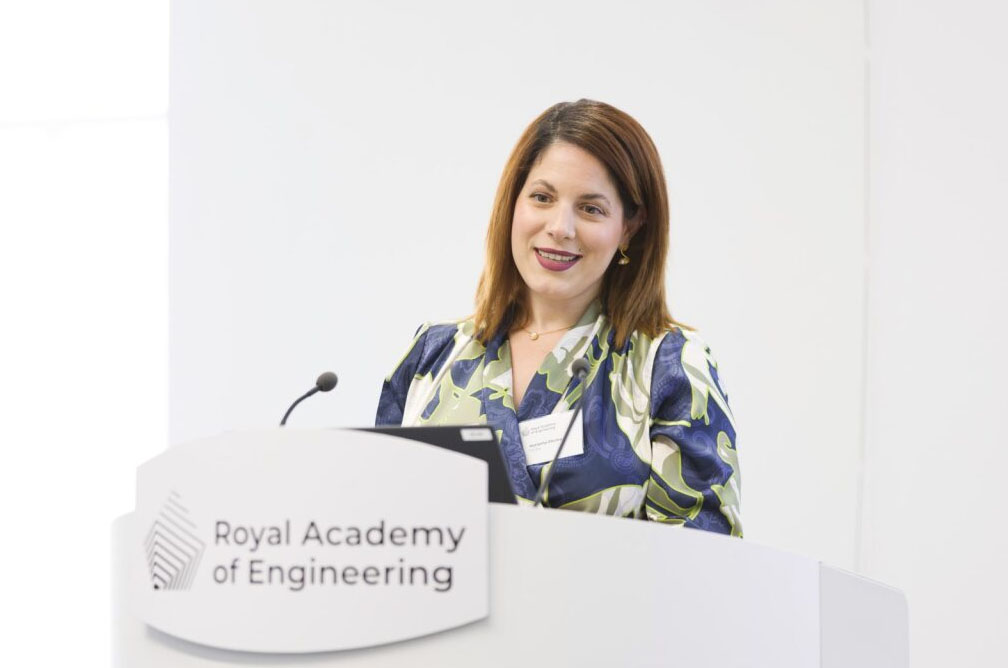
Marianna Dourou, Scientific Regulatory Affairs & IP Manager at FA Bio